Table of Contents
Plantar fasciitis is one of the leading causes of heel pain in adults. Many patients try home treatment of plantar fasciitis first and hope the pain will resolve without seeing a doctor. This guide explains when that works and when it does not.
What Is Plantar Fasciitis and Where Does the Pain Occur?
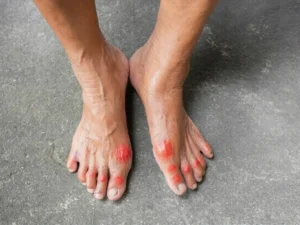
Many patients ask, can plantar fasciitis be in the heel? Yes, heel pain is the most common symptom.
Pain usually feels sharp with the first steps in the morning or after rest.
Without proper care, the inflammation can worsen over time.
Does Plantar Fasciitis Ever Go Away on Its Own?
In mild cases, symptoms may improve with rest and activity changes.
This leads many people to wonder, does plantar fasciitis ever go away on its own without treatment?
The honest answer is sometimes, but not always.
Without consistent home treatment of plantar fasciitis, symptoms often return or become chronic.
Home Treatment of Plantar Fasciitis: What Works Best?

Early home treatment of plantar fasciitis can reduce pain and inflammation.
These methods work best when started soon after symptoms appear.
Effective home treatment options include:
- Daily stretching of the calf and plantar fascia
- Reducing high-impact activities
- Wearing supportive shoes with arch support
- Applying ice after activity
While helpful, home treatment of plantar fasciitis may not fully heal moderate or severe cases.
Natural Remedies for Plantar Fasciitis Pain
Many patients try natural remedies for plantar fasciitis pain before seeking medical care.
These approaches can offer temporary relief when used consistently.
Common natural remedies include:
- Ice massage or frozen bottle rolling
- Gentle foot and calf massage
- Night splints to reduce morning stiffness
Although natural remedies for plantar fasciitis pain can ease discomfort, they often do not fix the underlying cause.
When Home Treatment Is No Longer Enough

If pain lasts longer than a few weeks, plantar fasciitis is unlikely to resolve on its own.
Continuing only home treatment of plantar fasciitis may delay proper healing.
Signs that professional care is needed include:
- Persistent heel pain despite rest
- Worsening morning pain
- Pain affecting walking or work
Ignoring these signs can lead to long-term foot problems.
How a Foot and Ankle Specialist Can Help
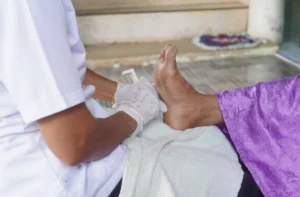
A specialist evaluates whether your heel pain is truly plantar fasciitis.
Many conditions mimic plantar fasciitis, so accurate diagnosis matters.
Advanced care may include:
- Custom orthotics to support the arch
- Targeted therapy plans
- Injections or advanced treatments when necessary
Professional treatment addresses what home treatment of plantar fasciitis cannot.
Plantar Fasciitis Treatment in Wichita, Kansas
At Foot and Ankle Surgeons of Kansas, patients receive expert foot and ankle care.
Our Wichita team treats plantar fasciitis using evidence-based, patient-focused solutions.
Our services include:
- Comprehensive foot and ankle evaluations
- Plantar fasciitis diagnosis and treatment
- Custom orthotics and footwear guidance
- Non-surgical and surgical options
Early care often shortens recovery time and prevents recurrence.
When Should You See a Doctor for Plantar Fasciitis?
Trying home treatment of plantar fasciitis is reasonable at first.
However, ongoing pain is a clear sign that medical care is needed.
You should see a specialist if:
- Pain persists beyond two to three weeks
- Heel pain worsens with activity
- Symptoms interfere with daily life
Early intervention leads to better outcomes.
Frequently Asked Questions
Yes, heel pain is the most common location for plantar fasciitis.
They may help relieve symptoms but often do not address the root cause.
Home care helps early cases, but persistent pain usually needs professional treatment.
While home treatment of plantar fasciitis can help early symptoms, lasting heel pain should not be ignored.
Foot and Ankle Surgeons of Kansas in Wichita provide expert diagnosis and treatment to help you recover safely and effectively.