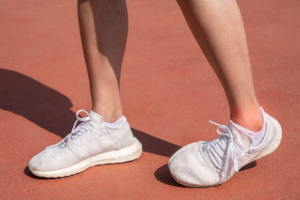
You’ve been running for a couple of weeks and feel great. Your fitness level is getting better, your mileage is building, and then suddenly your foot hurts. Your training level is going up, your miles are going up, and your foot starts to hurt. Of course, you might say that it’s your running shoes, the road surface or the kilometres you’ve run. Those can be important, but the link between running form and foot pain is frequently overlooked.
Many times, repetitive stress is applied to certain parts of the foot due to small changes in the way you land, move, and push off. That additional weight can add up over hundreds or thousands of steps and cause discomfort.
The good news? It is important to know how you run so you can find out what may be causing pain and make more informed changes. In this guide, we’ll look at the effect running form has on your feet, typical running gait-related issues, and how to resolve foot pain caused by running, plus when you should seek professional evaluation.
What Exactly Is Running Form And Why Does It Matter to Your Feet?
Running form is just the way your body moves as you are running. It involves multiple components – foot strike, stride length, cadence, posture, arm swing, and how your body absorbs and transmits force during each step.
Dramatically “bad” form is not a requirement for problems. In many circumstances, foot pain from running can be linked to a small mechanical pattern that continually puts more pressure on one part of the foot than the other.
Imagine driving a car with a little bit of the wheels off alignment. It can still be driving perfectly, but over time, some parts of the tyres can wear out quicker than others. Your running mechanics can function in a similar manner. If you always land on your arch, heel or forefoot, those tissues can eventually not handle the repeated load.
The key is that you don’t have to change everything you do while you’re running in order to improve your form. Sometimes, the effect of forces can be altered by making small, carefully selected adjustments. However, each runner is unique, so the aim should be to improve the way your body moves, rather than mimicking someone else’s.

Understanding Your Running Gait
A running gait is the entire movement pattern that happens with each step. It covers how your foot strikes the ground, how your foot contacts the ground, how your foot moves through the support phase, and how your foot pushes off before the next stride.
Each runner has a slightly different running style. Your running style may be affected by factors like your leg length, joint mobility, hip and ankle strength, past injuries, training history, and natural anatomy.
That’s why it can be frustrating to make a guess about what may be causing foot pain. Two runners can have the same pain in the same area because of two different causes. One might be overstriding, and the other might be lacking in ankle mobility or have less capacity for training load.
A professional gait analysis can help take some of the guesswork out of the process. A podiatrist or qualified clinician can determine factors that impact your foot’s load absorption and distribution through observation of your movement patterns.
Instead of making random adjustments that you’ve seen on the internet, having an awareness of one’s own running style can help to better inform the beginning steps to improving comfort and running efficiency.
Overpronation and Foot Pain: A Common Contributor
Pronation is a normal part of walking and running. After your foot lands, it naturally rolls inward to help absorb force and adapt to the ground. Problems may arise when that movement is excessive for your individual mechanics or when your body struggles to control the resulting load.
This is commonly described as overpronation. Overpronation foot pain may be felt around the arch, ankle, or other areas of the lower limb, although inward foot movement alone does not automatically mean something is wrong.
Several factors may contribute to excessive or poorly controlled pronation, including:
- Naturally flatter feet
- Worn or unsuitable running shoes
- Reduced foot and ankle strength
- Weakness or poor control around the hips
- Fatigue during longer runs
- Rapid increases in training load
The encouraging news is that these issues can often be managed. Depending on the individual, helpful strategies may include footwear changes, strengthening exercises, gait retraining, or orthotics.
The key is avoiding the assumption that every runner who pronates needs the same solution. A proper assessment can determine whether pronation is actually contributing to your symptoms and whether intervention is necessary.
Metatarsalgia in Runners: Pain in the Ball of the Foot
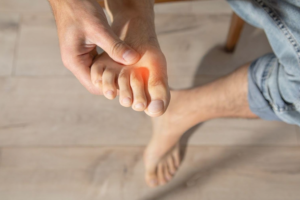
Metatarsalgia running problems are pain and irritation around the ball of the foot, where the metatarsal bones (the front of the foot) are in contact with the ground when running and walking.
Runners often report a burning, aching or as if there was a small pebble on their foot all the time. Symptoms can be more apparent with prolonged running or repeated impact.
Running mechanics can influence how much load reaches this area. For example, aggressive forefoot loading, excessive forward body positioning, or a sudden change in foot-strike style may increase stress through the front of the foot.
Other factors such as training factors are also important. Increased mileage, speed work, hills, or running intensity can be too much for the tissues, especially if they have not been given enough time to adapt.
If you experience pain around the ball of your foot, don’t just push through it. It is often more beneficial to stop the aggravating activity and determine where the excessive loading is coming from than to continually replace shoes without knowing the issue.
If symptoms are ongoing or worsening, they should be evaluated to exclude other causes of forefoot pain.
Arch Pain While Running: What's Really Going On?
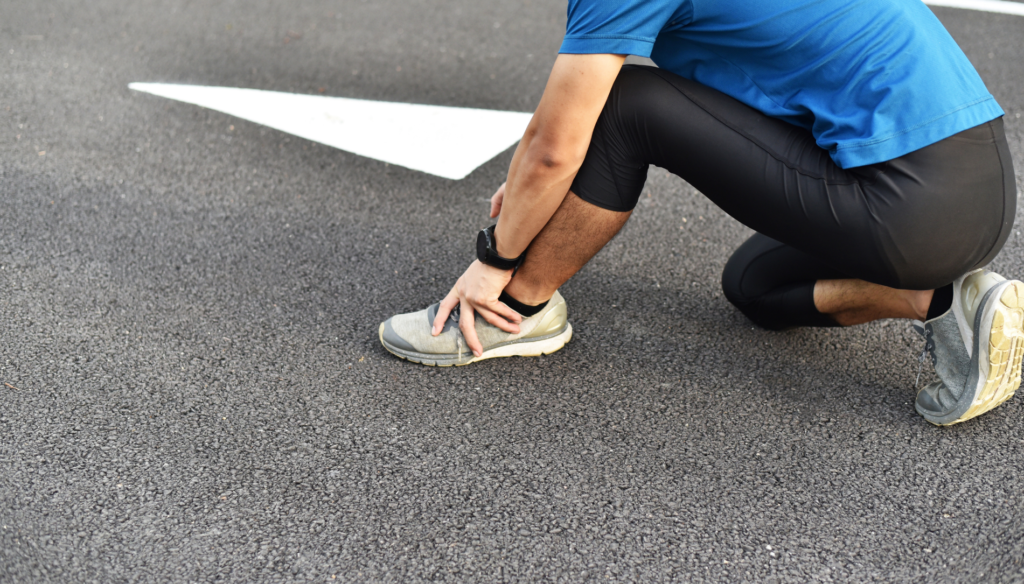
If you experience pain in your arch when running, it can be very annoying, as the arch is responsible for absorbing and distributing force with each step.
Discomfort may be related to irritation of the plantar fascia or other structures supporting the foot. Some runners have arches that flatten significantly under load, while others have very rigid feet that may not absorb impact as effectively.
A helpful tip is to observe when the pain develops. For instance, when pain is especially severe as soon as you first stand up after waking up, it may be linked to irritation of the plantar fascia. But this symptom is not enough to diagnose the cause.
Don’t just take one sign; think of all the signs: your running volume, footwear, recovery, strength, and running gait.
A podiatric evaluation will help identify if it seems to be a biomechanics, training load, footwear or other problem that would need a different strategy.
Forefoot Pain While Running: When the Front of Your Foot Takes the Hit
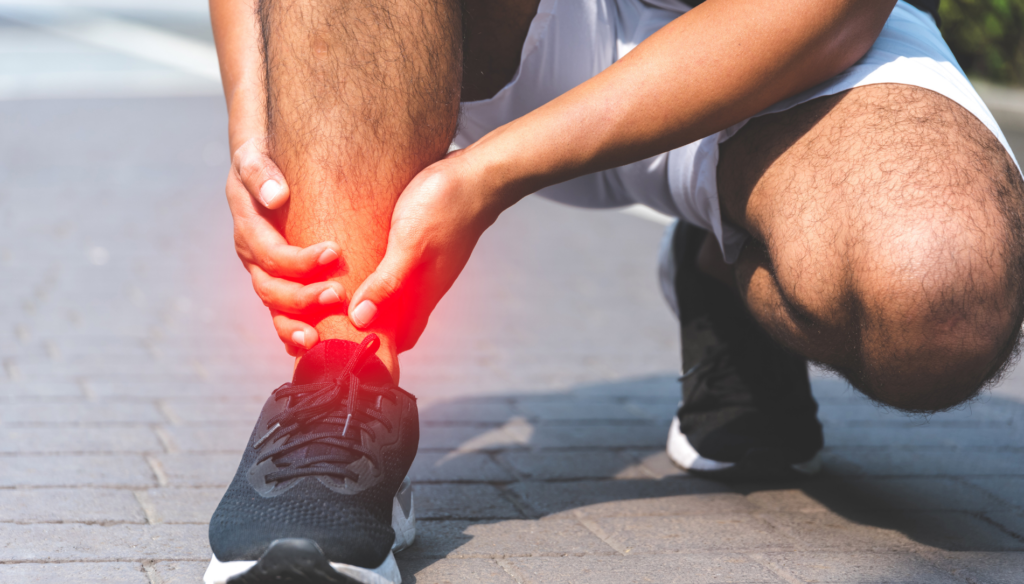
Forefoot pain while running is an umbrella term that refers to pain in the front of the foot. Metatarsalgia is only one of many potential causes, but joint pain, nerve pain, soft tissue overload and bone stress are also possibilities.
Running style may affect the amount of force that is transmitted to the forefoot. All of these factors, such as a strong or abrupt push-off, too much time spent loading the toes, and too quick a transition to minimalist shoes, can add stress to this area.
Running downhill can also worsen the front of the foot because it can cause repeated impact and pressure.
If the forefoot pain is persistent, sharp or highly localised, then it is not worth repeating the experiment of running form and should be assessed by a professional.
The Best Running Form to Prevent Foot Pain
No one technique is perfect for all runners. A good running style to avoid foot pain is a style that is efficient at managing the load and that matches your body, fitness, strength and training requirements.
However, there are some practical points to consider:
Look for a comfortable and efficient cadence.
Instead of everyone having to run at 180 steps per minute, try to use your natural running cadence as a template. There is some evidence that a small change in step rate (typically 5-10%) can alter stride length and loading pattern. This can be beneficial for some runners with the proper guidance.
Maintain an Upright, Relaxed Posture
Keep your head and torso comfortably tall, with relaxed shoulders and arms that swing naturally. Excessive tension can affect movement throughout the body.
Don’t Force a Particular Foot Strike
A heavy, aggressive landing may increase impact, but simply forcing yourself from a heel strike to a forefoot strike is not necessarily safer. Different strike patterns distribute load differently.
Strengthen your body beyond your feet!
Well-muscled calves, feet, ankles and hips can enhance control of movement and running loads. Ideally, exercises should be tailored to the individual.
The final solution is individualised. A professional gait assessment will tell you which parts of your gait you need to change, and which parts you don’t.
How to Fix Foot Pain From Running
Understanding how to fix foot pain from running starts with one important question: Why is the pain happening?
Symptom relief without tackling the underlying cause can cause temporary relief, followed by recurrent discomfort. Some practical steps could be:
Limit aggravating load: Temporarily cut back on mileage, intensity, and/or activities that typically exacerbate symptoms.
Look at your shoes: Assess if your shoes are worn out or not right for your running needs.
Don’t make sudden changes to training: Increase mileage, speed and hill work slowly.
Increase the strength of important regions: Focused foot, ankle, calf, and hip strengthening exercises can help you better handle running loads.
Facilitate mobility, if possible: If mobility is limited, this can have an impact on the distribution of forces.
Take professional advice on orthotics: There are some runners who can benefit from orthotics, but they should be prescribed on an individual basis.
Most importantly, do not make several big changes at once! When you adjust your shoes, cadence, foot strike and training volume all at once, it’s hard to determine what’s helping or what’s causing more irritation.
A podiatric examination will help determine if the symptoms are due to biomechanics, training errors, footwear or another problem that needs special attention.

When to See a Podiatrist
If you have some mild discomfort when running, then you need to take care of your load, but if you experience foot pain that doesn’t go away, you should not ignore it.
If you have any of these symptoms, it is time to visit a podiatrist:
- Persistent pain that lasts for more than a couple of weeks.
- Noticeable swelling
- Acute or localised pain
- Pain that gradually increases in severity.
- Symptoms that alter gait or running/walking patterns
- Recurrent pain that happens each time you train.
Your podiatrist can evaluate your foot function, footwear, training background, and running gait to determine potential factors.
Management can involve gait analysis, footwear advice, strengthening advice, load management advice or orthotic therapy depending on your needs. The aim is not just to get you running again fast, but to help you to understand what went wrong and how you can minimise the risk of it happening again.
How Foot & Ankle Surgeons of Kansas Can Help
Recurring foot pain while running can have more than one cause. Understanding how your feet and body move during activity can help identify factors that may be placing extra stress on your foot.
Our specialists may evaluate:
- Running gait and movement patterns
- Foot strike, stride, and cadence
- Foot and ankle strength and mobility
- Areas of pain and how your symptoms develop during activity
- Training volume, intensity, and recent changes
- Running shoes and footwear habits
- Previous injuries and medical history
- Digital imaging when needed to evaluate other possible causes of pain
Depending on the cause of your symptoms, treatment may include:
- Gait or running-form adjustments
- Training and activity modification
- Foot, ankle, calf, and hip strengthening
- Mobility exercises
- Footwear recommendations
- Custom orthotics when appropriate
- Physical therapy or rehabilitation
- Additional testing or imaging when necessary
Our goal is to identify what may be contributing to your foot pain and develop an individualized plan that helps you run more comfortably while reducing unnecessary stress on your feet.
Frequently Asked Questions
Yes. Poor running form can place excessive stress on certain areas of the foot, potentially causing pain in the arch, heel, or forefoot.
The best running form usually involves shorter, controlled strides, a comfortable cadence, relaxed posture, and efficient movement suited to your body.
Yes. Overpronation can increase stress on the arch and surrounding structures, which may contribute to foot and ankle discomfort.
Reduce aggravating activity, review your footwear and training load, and seek professional advice if the pain persists or worsens.
Conclusion: Run Smarter, Not Just Harder
Running can be a great way to get exercise, but that doesn’t mean that foot pain is inevitable. Learning how running form and foot pain correlate can help you find patterns that could be putting extra stress on your foot.
There is no single correct approach or a standard shoe size. Everything from your gait, training volume, strength, and your body shape all play a role.
A professional gait analysis or podiatry consultation may be able to help you determine the cause of the foot pain that is recurring or interfering with your running, and help you get back to running safely and comfortably.