
Twisting your ankle is one of the most common injuries, whether you’re playing sports, exercising, or simply stepping awkwardly off a curb. But not all ankle sprains are the same. One of the biggest misconceptions is that every sprain heals the same way.
Understanding the difference between a high vs low ankle sprain can help you know what to expect, how long recovery may take, and when it’s time to see a specialist. Although both injuries affect the ankle ligaments, they involve different structures and often require different treatment approaches.
At Foot & Ankle Surgeons of Kansas, we evaluate ankle injuries every day and help patients recover safely while reducing the risk of future problems.
What Is an Ankle Sprain?
An ankle sprain occurs when one or more ligaments that support the ankle are stretched or torn.
Ligaments connect bones and help keep your ankle stable during movement. When they are injured, pain, swelling, and instability can develop almost immediately.
Understanding the different types of ankle sprains is the first step toward choosing the right treatment.
What Is a Low Ankle Sprain?
A low ankle sprain is the most common type of ankle injury.
Also known as a lateral ankle sprain, it usually occurs when the foot rolls inward, stretching or tearing the ligaments on the outside of the ankle.
Common symptoms include:
- Pain on the outside of the ankle
- Ankle swelling and bruising
- Difficulty walking
- Tenderness around the ankle
- Mild to moderate instability
Most people who sprain an ankle experience this type of injury.
What Is a High Ankle Sprain?
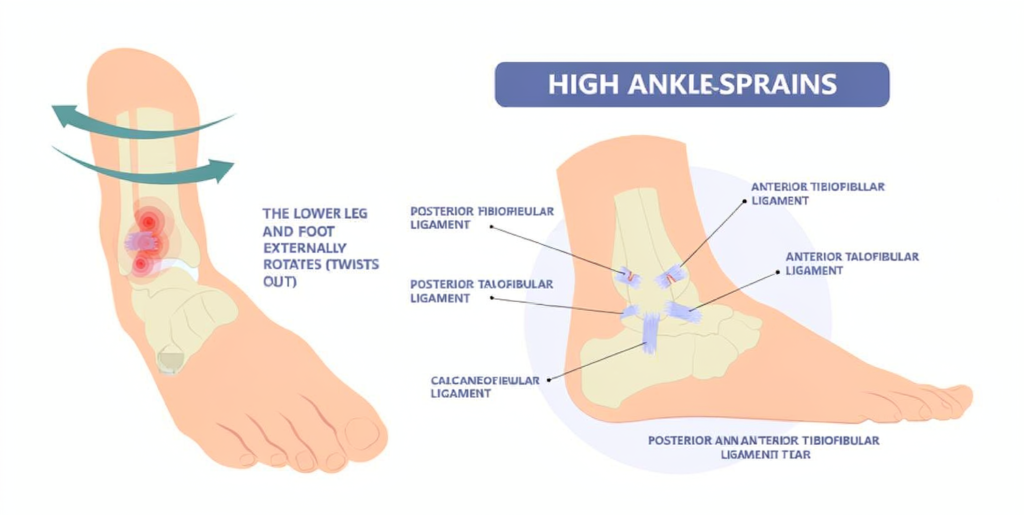
A high ankle sprain affects the ligaments located above the ankle joint that connect the two lower leg bones (the tibia and fibula).
Unlike a lateral ankle sprain, high ankle sprains are less common but often more serious.
These injuries usually occur during sports involving sudden twisting or rotation while the foot remains planted.
Symptoms often include:
- Pain above the ankle
- Difficulty walking
- Pain when twisting the foot
- Reduced ankle stability
- Swelling that may be less obvious than a low sprain
Although swelling may be less noticeable, recovery often takes longer.
High vs Low Ankle Sprain: Key Differences
Understanding high vs low ankle sprain injuries becomes much easier when you compare where they occur and how they behave.
|
Low Ankle Sprain |
High Ankle Sprain |
|
Injures outer ankle ligaments |
Injures ligaments above the ankle |
|
More common |
Less common |
|
Usually caused by rolling the ankle inward |
Often caused by twisting while the foot stays planted |
|
Swelling appears quickly |
Swelling may be less noticeable |
|
Usually heals faster |
Often requires a longer recovery |
Both injuries deserve proper evaluation because treatment differs depending on which ligaments are involved.
How Is an Ankle Sprain Diagnosed?
An accurate ankle sprain diagnosis begins with a physical examination.
Your foot and ankle specialist may assess:
- Where the pain is located
- Range of motion
- Ligament stability
- Swelling
- Bruising
- Ability to bear weight
If a fracture or more severe injury is suspected, X-rays or advanced imaging may also be recommended.
Getting the correct ankle sprain diagnosis helps ensure appropriate treatment and reduces the risk of long-term instability.
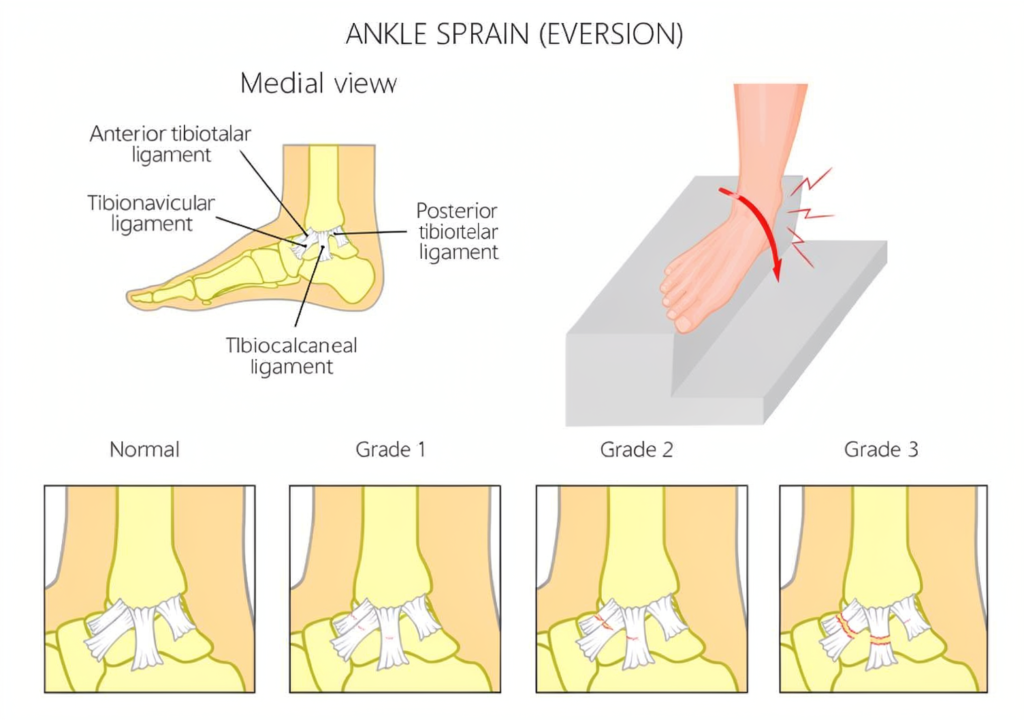
Understanding Ankle Sprain Grading
Not every sprain causes the same amount of damage.
Doctors use ankle sprain grading to classify injuries.
Grade 1
- Mild stretching of the ligament
- Minimal swelling
- Mild discomfort
- Little or no instability
Grade 2
- Partial ligament tear
- Moderate swelling
- Bruising
- Difficulty walking
Grade 3
- Complete ligament tear
- Severe pain
- Significant instability
- Difficulty bearing weight
The grade of the injury has a major impact on recovery time.
High Ankle Sprain Recovery Time
One of the biggest differences in high vs low ankle sprain injuries is recovery.
Typical high ankle sprain recovery time ranges from:
- 6 to 12 weeks for many injuries
- Longer for severe ligament damage
- Even longer if surgery becomes necessary
Returning to sports too early increases the chance of reinjury.
Low Ankle Sprain Recovery Time
Most lateral ankle sprain injuries heal more quickly.
Typical low ankle sprain recovery time includes:
- Grade 1: 1–3 weeks
- Grade 2: 4–8 weeks
- Grade 3: Several months
Following a structured rehabilitation program often helps speed recovery while reducing future ankle problems.
Don't Ignore Ankle Pain When Walking
Many people assume they can simply “walk off” an ankle sprain.
Persistent ankle pain when walking may indicate:
- More severe ligament damage
- A high ankle sprain
- An undiagnosed fracture
- Tendon injury
- Chronic instability
If walking remains painful after several days, it’s important to seek professional care rather than continuing to push through the discomfort.
Why Rehabilitation Matters
Healing doesn’t end when the swelling disappears.
Restoring ankle stability is one of the most important parts of recovery.
Rehabilitation often focuses on:
- Balance training
- Strengthening exercises
- Flexibility
- Walking mechanics
- Injury prevention
Skipping rehabilitation increases the likelihood of repeated ankle sprains later.

How Foot & Ankle Surgeons of Kansas Can Help
Whether you’ve suffered a recent ankle injury or your ankle never fully recovered after a previous sprain, our specialists can help.
We provide:
- Comprehensive ankle evaluations
- Digital imaging when needed
- Personalized treatment plans
- Bracing and rehabilitation
- Physical therapy recommendations
- Advanced surgical care for severe injuries
Our goal is to restore strength, improve ankle stability, and help you return safely to your daily activities and sports.
Frequently Asked Questions
A low ankle sprain usually affects the ligaments on the outside of the ankle, while a high ankle sprain involves the ligaments connecting the two lower leg bones above the ankle.
A lateral ankle sprain is the most common type of ankle sprain and occurs when the foot rolls inward, injuring the outer ankle ligaments.
Typical high ankle sprain recovery time ranges from six to twelve weeks, depending on the severity of the injury.
Persistent ankle pain when walking may indicate a more severe ligament injury, inadequate healing, or another underlying condition that requires evaluation.
Understanding the difference between a high vs low ankle sprain can make a significant difference in your recovery. While both injuries affect the ankle ligaments, they involve different structures, healing timelines, and treatment approaches.
If you’re experiencing ankle swelling and bruising, ongoing ankle pain when walking, or concerns about your ankle stability, don’t assume the injury will heal on its own. Early diagnosis and appropriate treatment can help you recover more completely and reduce the risk of future ankle problems.